
EDD Calculator
Calculate your Estimated Due Date (EDD) from your Last Menstrual Period (LMP)
This is an estimate – consult your healthcare provider for accurate dating.
Pregnancy is an incredible journey filled with excitement, anticipation, and a bit of planning. One of the first things you’ll want to know is your Estimated Due Date (EDD)—that magical date when you might meet your little one. Whether you’re a first-time parent or welcoming another addition to your family, understanding your EDD Calculator helps you prepare, track your baby’s growth, and stay on top of prenatal care. This guide is your go-to resource for everything about the EDD calculator, from tried-and-true methods to handy apps and answers to all your burning questions.
What is an Estimated Due Date (EDD)?
Your Estimated Due Date (EDD) is the day your baby is most likely to arrive, calculated as roughly 40 weeks from the first day of your last menstrual period (LMP). It’s like a finish line for your pregnancy journey, guiding you and your healthcare team through check-ups, ultrasounds, and prep for the big day.
Here’s the thing, though: only about 4% of babies make their grand entrance right on their EDD. Most arrive within a two-week window before or after, so think of it as a ballpark rather than a set-in-stone date.
Why Knowing Your EDD Matters
Your EDD isn’t just a date to circle on the calendar—it’s a key part of your pregnancy:
- Tracking Baby’s Growth: It helps you follow your baby’s development milestones.
- Planning Prenatal Care: Doctors use it to schedule important tests and screenings.
- Getting Ready: It gives you a timeline to prep for delivery, from packing your hospital bag to arranging maternity leave.
- Guiding Medical Decisions: It informs choices like labor induction or monitoring if your pregnancy goes past term.
Methods to EDD Calculator
There are a few ways to figure out your EDD, each with its own vibe depending on what info you have and how precise you need to be.
1. Naegele’s Rule
Naegele’s Rule is the classic, old-school way to estimate your due date. It’s super simple and widely used by doctors and midwives. Here’s how it works:
- Start with the first day of your last menstrual period (LMP).
- Add one year.
- Subtract three months.
- Add seven days.
Example:
Let’s say your LMP was March 1, 2025:
- Add one year: March 1, 2026
- Subtract three months: December 1, 2025
- Add seven days: December 8, 2025
Your EDD would be December 8, 2025.
This method assumes you have a regular 28-day cycle with ovulation around day 14. If your cycles are a bit different, you might need a tweak to make it more accurate.
2. Conception Date Method
If you know exactly when conception happened (lucky you!), this method is for you. Just add 266 days (about 38 weeks) to the conception date to get your EDD. This is especially handy for folks using assisted reproductive technologies like IVF, where the conception date is pinpointed.
Example:
If conception was on April 15, 2025:
- Add 266 days: January 6, 2026
Your EDD would be January 6, 2026.
3. Ultrasound Dating
Ultrasounds are like a sneak peek at your baby—and they’re one of the best ways to nail down your EDD, especially if your periods are irregular or you’re unsure about your LMP. Early ultrasounds measure your baby’s size and compare it to standard growth charts.
- First-trimester ultrasounds: These are the gold standard, accurate within 3-5 days.
- Second-trimester ultrasounds: Still good, but accuracy drops to about 7-10 days.
- Third-trimester ultrasounds: Less precise (within 14-21 days) because babies grow at different rates later on.
Your doctor might combine ultrasound results with your LMP to get the most reliable EDD.
EDD Calculation Formula
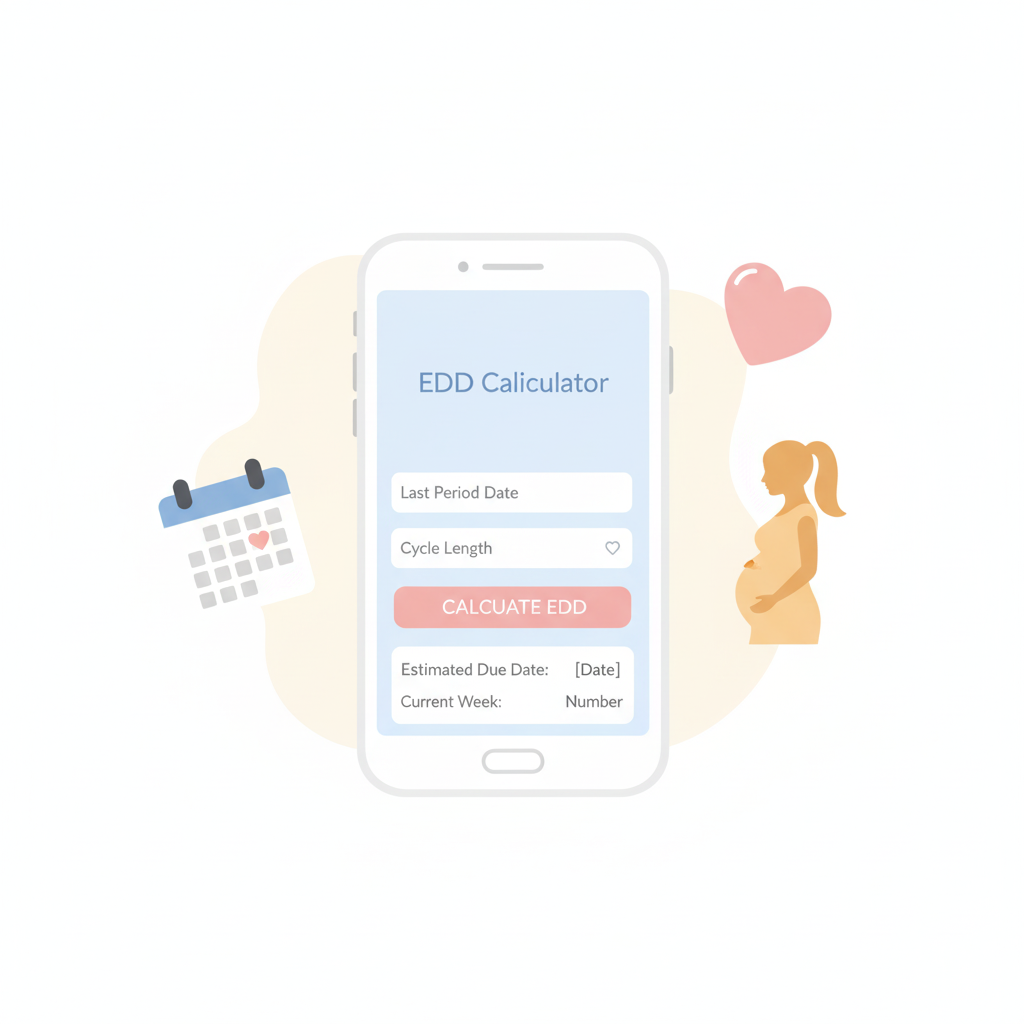
For a standard 28-day cycle, the go-to formula is:
EDD = LMP + 280 days
Example:
If your LMP was June 1, 2025:
- Add 280 days: March 8, 2026
Your EDD would be March 8, 2026.
If your cycle isn’t the textbook 28 days, you’ll adjust by adding or subtracting the difference in days to account for longer or shorter cycles.
EDD Calculators and Tools
Why do math when technology can do it for you? Here are the top tools to make EDD calculations a breeze.
1. Online EDD Calculators
Online EDD calculators are quick, user-friendly, and packed with extras. Just pop in your LMP or conception date, and you’ll get:
- Your estimated due date
- Your current gestational age
- Days until your due date
- Cool insights like fetal development milestones
These tools are perfect for getting a quick estimate without grabbing a calculator or calendar.
2. Mobile Apps
Mobile apps are like having a pregnancy coach in your pocket. They calculate your EDD and offer tons of extras:
- Pregnancy Tracker Apps: Follow your baby’s growth week by week, with tips on nutrition and self-care.
- Due Date Calculator Apps: Include reminders for doctor visits, kick counts, and more.
- LMP and EDD Calculators: Designed to estimate your due date based on menstrual or conception data.
Available for iOS and Android, these apps are perfect for staying organized and informed on the go.
3. Pregnancy Wheels
A pregnancy wheel is a low-tech, hands-on tool used by doctors and midwives. You line up your LMP on the wheel, and it points to your EDD. While apps have taken over, these wheels are still a trusty staple in clinics and hospitals.
Calculating EDD with Irregular Cycles
Not everyone has a perfect 28-day cycle, and that’s totally okay! For irregular cycles, you’ll need to adjust Naegele’s Rule:
- Longer cycles: Add the extra days (beyond 28) to your EDD.
- Shorter cycles: Subtract the difference from your EDD.
Example:
If your cycle is 32 days (4 days longer than 28), add 4 days to your calculated EDD. So, if Naegele’s Rule gives you December 8, 2025, your adjusted EDD would be December 12, 2025.
This tweak makes your estimate way more accurate for your unique cycle.
LMP and EDD Calculators
LMP-based EDD calculators are super popular because most people remember the start of their last period more clearly than their conception date. These tools use your LMP to estimate your due date and often pair with apps that track your cycle, ovulation, and other fertility details for a sharper prediction.
Benefits of Using EDD Calculators
Using an EDD calculator comes with some serious perks:
- Accuracy: No more worrying about math mistakes.
- Convenience: Get your due date in seconds, no calendar flipping required.
- Monitoring: Keep tabs on your pregnancy milestones and baby’s growth.
- Planning: Helps you map out everything from doctor visits to nursery setup.
Whether it’s an online tool or a mobile app, these calculators take the stress out of tracking your pregnancy.
Common FAQs On EDD Calculator
Final Thoughts
Knowing your Estimated Due Date is a game-changer for planning your pregnancy and staying on top of your baby’s development. Whether you’re crunching numbers with Naegele’s Rule, using a conception date, or relying on an ultrasound, there’s a method that fits your needs. Plus, with awesome tools like online calculators and mobile apps, you can get instant results and track your pregnancy like a pro. While your EDD is an estimate, it’s a powerful tool for preparing for your little one’s arrival. Always check in with your healthcare provider for personalized guidance to make your pregnancy journey as smooth as possible.